

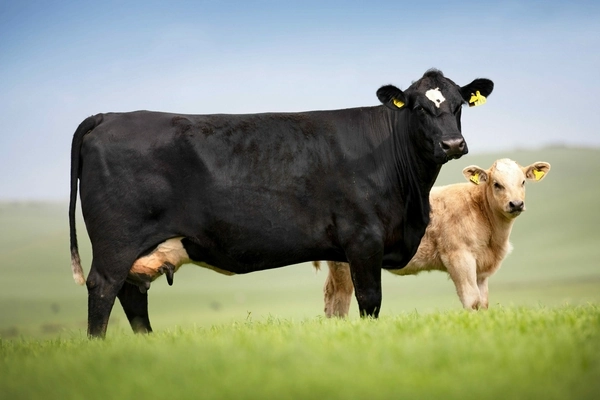
A Green Cow is a Good Cow for Both Business and Environment
By Dr. Emma McGowan, Genetics Specialist, Quality Meat Scotland (QMS)
Scotland has long been recognised as one of the leading beef-producing nations in the world. Through innovation in breeding and husbandry, our farmers have built legacies capable of addressing global challenges. Today, we face one of the most pressing challenges of all – tackling climate change – and our industry is ready to meet it.
The Food and Agriculture Organisation (FAO) has made it clear: food-producing nations can achieve their climate goals while also tackling malnutrition. The solution lies in improving productivity and efficiency. Addressing climate change is a UN priority, but so too is global nutrition. As the FAO states:
“Our first goal is to address malnutrition in all its forms. Undernutrition affects physical and cognitive development.” (FAO Report, 2022)
This is particularly relevant in Scotland. A recent report from Food Standards Scotland (FSS) highlights the vital role red meat and dairy play in our national diet:
“Given the diet of the Scottish population is so poor, particularly in some sub-groups, an across-the-board population reduction in meat and dairy consumption cannot be recommended.” (FSS, 2024)
In short, animal agriculture in Scotland provides essential, nutrient-dense foods that support healthy growth, brain development, and overall wellbeing.
At the same time, the Scottish Government has set an ambitious target to reduce emissions by 2045. The beef sector, which accounts for the largest share of agricultural greenhouse gas (GHG) emissions, has a central role to play. In March 2022, QMS commissioned SAC Consulting to explore how the red meat supply chain could meet these national targets. The conclusion? By improving on-farm efficiencies, we can reduce emissions while also strengthening the productivity and profitability of Scottish livestock businesses.
This creates a win-win opportunity: better for the environment, and better for business.
Taking Action
To unlock this potential, we need to focus on practical, science-led solutions. The UN FAO has identified four key areas where livestock producers can make the biggest impact:
1. Low-Emissions Breeding
Genetics has a powerful role to play in building more productive, resilient, and sustainable herds. Research in Scotland has already shown that animals can be selected for traits linked to lower methane emissions without compromising performance.
For example, studies at the Roslin Institute and SRUC have demonstrated that the bovine genome influences rumen microbiome function, directly impacting methane output. By combining this type of cutting-edge science with practical on-farm breeding programmes, we can select animals that are both productive and climate-smart.
Selecting for traits such as weight gain, shorter calving intervals, higher calving percentages, and lower mortality rates not only improves profitability but also reduces waste and emissions.
2. Increasing Productivity
Productivity is one of the most impactful levers farmers have. Animals that reach finishing weight faster, calve more efficiently, or produce more over their lifetime have a smaller carbon footprint.
3. Improved Animal Health
Healthy animals are more productive animals. Poor health reduces performance and increases emissions. For example, Johne’s disease is estimated to raise GHG emissions by around 25% per litre of milk and 40% per kilogram of beef (Acting on Methane, 2022).
Investing in herd and flock health delivers benefits on multiple fronts: lower emissions, stronger profitability, and higher animal welfare standards.
The Take-Home Message
A “green cow” is not a mythical concept – it’s the cow you would already choose for your system based on genetics, productivity, health, and profitability.
By prioritising breeding, increasing productivity, and maintaining high standards of animal health, we can reduce emissions while continuing to provide the nutrient-dense foods Scotland needs.
The opportunity is clear: with the right focus, our beef sector can drive positive change for both business and the environment.