

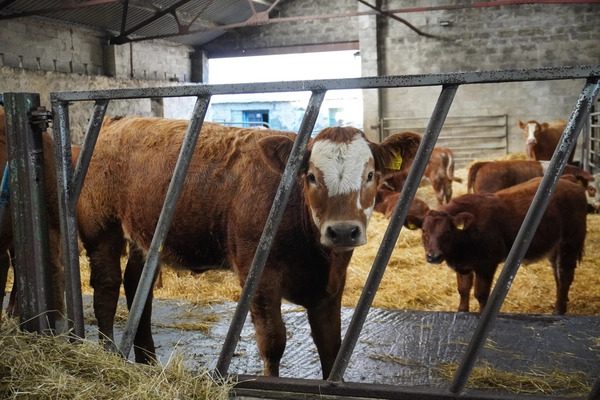
Farmers are being reminded to talk to their vet and to vaccinate young cattle and calves for pneumonia this autumn after a Strathspey Monitor Farm study showed an outbreak led to a multi-thousand-pound loss for the business.
Treating an outbreak is often regarded as a big expense in terms of vet and med costs – but it was the consequent poor performance which contributed most to losses.
Enduring the ‘horrible’ outbreak of pneumonia at Auchernack near Grantown on Spey was tough for Monitor Farmer Malcolm Smith. He and his family aim to produce top-quality, growthy store cattle from their 150 sucklers, calving from mid-November to early January and from late March to May. Back-end calves are weaned and housed in October, with spring-born calves weaned and housed in November. Cattle are sold at 12-14 months.
The run-up to housing generally always sees young cattle and calves vaccinated for pneumonia. In January 2023 the farm had a few clinical cases in calves and young cattle, and these were treated on-farm. In the October, a few more clinical cases were treated, and 40 of the back-end calves were vaccinated with Bovilis Intranasal RSP.
However, a sudden turn in the weather and the need to get cattle in quickly, coupled with pressure of other work, meant spring-born calves weren’t vaccinated before coming inside in November. All seemed fine initially, but by December these calves had pneumonia, says Jane Harley, clinical director of the farm’s veterinary practice, Strathspey Vets. “They were treated and we took samples, which confirmed this was RSV.”
She explains that most vets offer subsidised testing via the vet pharmaceutical companies. “The tests will confirm you are treating for the right thing.”
The vet and med costs for tackling the outbreak came to £800, with lab fees and investigations costing a further £300. However, Malcolm says this was only a small part of the cost of the outbreak; the financial implication of lost performance in the cattle was dramatic.
The farm was feeding for 1kg/head daily liveweight gain (dlwg), but from the start of the outbreak until the end of January, average dlwg fell to 0.6kg/head/day. “Over the two months of the outbreak, cattle averaged only 36kg/head growth, where we had been expecting 60kg/head.”
After the outbreak, although most cattle recovered and growth efficiency returned, some continued to under-perform due to permanent lung damage, he says.
With the diet to achieve 1kg/head dlwg costed at £1.35/head/day, or £116/day for the group of 86 calves, the drop in performance saw the equivalent diet cost almost doubling to £2.25/head/day, or £193.50/day for the group.
“Although weight gain increased back to normal for most of the cattle, if you don’t recover the kilograms lost during the outbreak then the costs mount up,” he says.
With the farm’s usual store sale weight reduced by 24kg/head at an average sale price of £3.29/kg, the cost of reduced performance was almost £79/head, with a group cost of £6,790.
Jane says: “To that we should add the cost of Malcolm’s time running calves through the handling system three times to examine them, take samples, treat them, check temperatures and record weights and treatments and so on. There’s also the stress involved and the mental health impact too.”
With the overall market loss standing at £6,790, then the additional costs such as the vet, etc coming to £1,600, the total cost of £8,390 was a big financial penalty for the farm, says Malcolm.
“We’ve been open about the costs and losses as it is scary. If you’re feeding for dlwg of 1kg and getting 0.1kg, which we were in some cases, it soon adds up. Vaccinating would have cost us £700 and we have made it a priority now.” This autumn, the Smiths plan to vaccinate at least a couple of weeks before housing, reducing the stress of doing everything at once.
Jane adds: “The farm is nearly £8,500 worse off as a result of this outbreak – and there is the time involved to factor in too.
“Talk to your vet at any time regarding vaccines as each farm will be different depending on what is causing the pneumonia but also what the management system is in relation to calving periods, housing and so on. Be aware of lungworm before housing and also check in with your own vets re Blue Tongue vaccines and movements.
“Many farm have the odd case of pneumonia here and there, and it’s easy to forget that these do mount up, so talk to your vet even if it’s just a few animals. Ask for a test to see what you are contending with and make sure you are treating for the right thing. There are some farmers who do test, but not as many as we would like.
“My main message is to talk to your vet, and the key thing from this case study is that making time to vaccinate – and for the right thing on your farm – is crucial,” she says.