
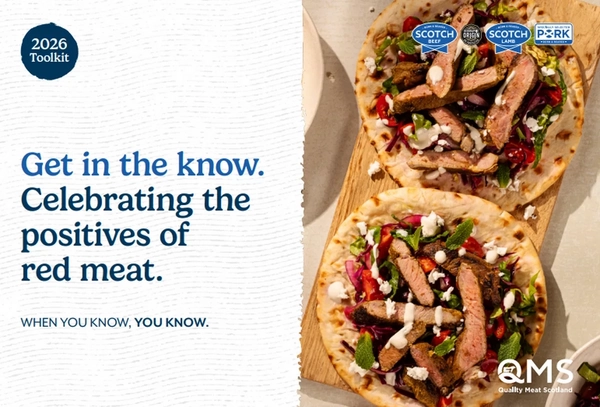
To mark the start of the new year, Quality Meat Scotland (QMS) has released a refreshed edition of its “Get in the Know: Celebrating the Positives of Red Meat” toolkit. The updated resource supports stakeholders in highlighting the health, sustainability, and socio-economic value of Scotland’s red meat, while also explaining the heritage and quality behind the Scotch Beef, Scotch Lamb, and Prime Scottish Pork brands.
Tracy Martin, Reputation Manager at QMS, said: “Our updated 2026 toolkit is designed to cut through the noise around red meat and nutrition. It provides clear, evidence-based information that demonstrates how Scotch Beef, Scotch Lamb, and Prime Scottish Pork contribute to a healthy, balanced diet, while also highlighting the industry’s vital role in supporting sustainable farming practices and thriving rural communities.”
Some of the important stats highlighted in the toolkit include the nutritional value of red meat, which is rich in iron, zinc, vitamin B12, and high-quality protein, all essential for muscle function, immunity, and overall health. Research shows that children, teenagers, and young adults are at risk of low intakes of several micronutrients when red meat (and dairy) consumption is reduced, with zinc deficiency risk increasing by up to 35%.
Scottish swimming athlete Lili Mundell uses red meat to maintain her iron levels, commenting: “Without adequate iron in the body, the muscles don’t get enough oxygen, leading to fatigue. Small changes to your diet can have a big impact on your energy and performance.”
Recent Make It Scotch research also found that almost half of Scottish women are ‘not confident’ or ‘unsure’ whether their diet provides enough iron. While most recognise tiredness as a symptom of low iron intake, fewer were aware of other signs such as shortness of breath, headaches, or brain fog.
Average red meat intakes in Scotland are now below the daily 70g limit set by government experts, with women consuming significantly less than men, at 66g per day on average. Blanket recommendations to limit red meat further could disproportionately reduce nutrient intake.
The toolkit also highlights the wider positive impact of the Scottish red meat industry. The industry continues to invest in sustainable farming practices, creating healthier soil, helping the environment to thrive and enhancing natural ecosystems.
Economically, the red meat sector contributed an estimated £3.5 billion of output in 2024, supporting farmers, processors, and the wider supply chain, and representing over 35% of national farming output.
Packed with infographics, shareable digital assets, videos, and recipe inspiration, the toolkit makes information accessible for both industry stakeholders and consumers.
The QMS Community Engagement team continues to support young people and wider communities through talks, cookery demonstrations, and Eat to Compete sessions, with Make It Scotch Ambassadors delivering educational events across Scotland. The toolkit forms part of this outreach work, helping to promote positive red meat conversations across the country.
For more information and to access the updated toolkit, visit https://qmscotland.co.uk/news-media/publications and follow QMS on social media.