
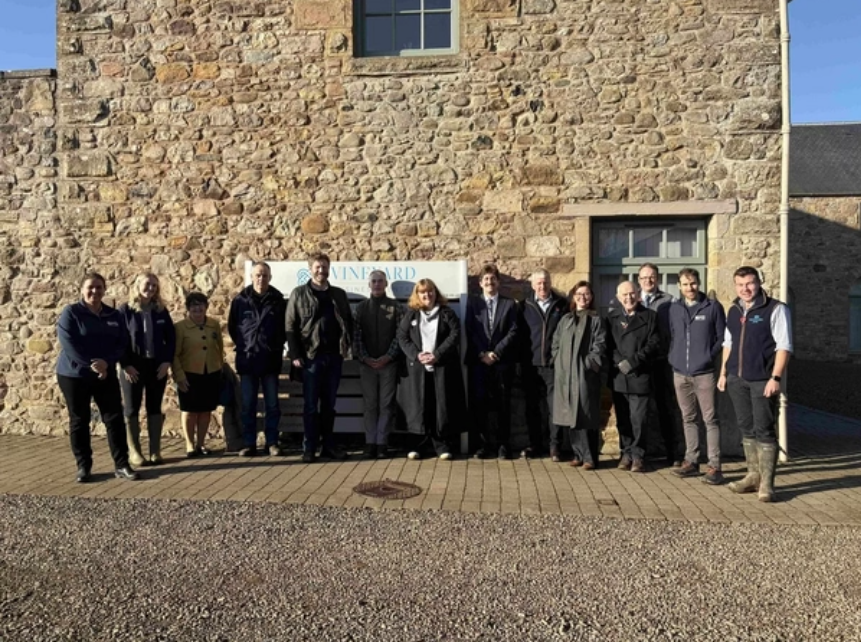
Quality Meat Scotland (QMS) alongside stakeholder members of the Scottish Red Meat Resilience Group has successfully completed the first half of a series of strategic engagement events with MSPs, councillors and parliamentary candidates across key regions of Scotland as part of its national Meating Our Potential campaign.
So far, five events across farms in key regions of Scotland from the Highlands and Islands to central belt have taken place, each gathering several political representatives and decision makers across the political parties. In the lead-up to the 2026 Scottish Parliament election, these ‘show and tell’ visits in real industry settings provide first-hand insight into key parts of the Scottish red meat supply chain, deepening understanding of holistic sectoral contributions across economy, society and environment.
The visits also support open dialogue between local representatives, QMS, members of the Scottish Red Meat Resilience Group (SRMRG) and Food and Agriculture Stakeholders Taskforce (FAST) to discuss region-specific challenges and opportunities, including reinforcing the significant economic protentional to grow our national beef herd to meet rising demand.
The initial series of engagements in October and November 2025 included:
Kate Rowell, QMS Chair, said: “We are pleased with the diverse political uptake and positive feedback from our most recent political engagements, which have been a fantastic opportunity to demonstrate the impact and scale of opportunity within Scotland’s red meat sector.
“Collaborating with industry to put on these ‘farm-window’ visits, enables us to go beyond storytelling and really show key representatives and decision makers the realities and contributions of our important Scottish red meat sector. We know from past successful visits that this ‘real setting’ format resonates, and we look forward to continuing the series in the new year across other key regions in Scotland.
“On behalf of all partners involved, I would like to thank all MSPs, candidates and councillors who have taken the time to visit, listen and engage with the issues that really matter to rural Scotland.”
At each visit, QMS provided briefings on the economic importance of the red meat sector, emphasising the need for increased industry confidence to boost productivity and cultivate our significant opportunity to strengthen Scotland’s position both domestically and internationally. Attendees then toured the farms, where producers showcased what improved market confidence could mean in practical terms for example, additional livestock or greater throughput, giving policymakers first-hand insight into how investment and support translate into business growth.
Alongside the on-farm visits, QMS attended the Convention of Scottish Local Authorities (COSLA) Annual Conference and Exhibition at Fairmont St Andrews on 13–14 November. The conference, which gathers councillors, local government leaders, national stakeholders and policy experts from across Scotland, provided an opportunity to discuss key issues affecting local communities. At the event, QMS engaged with delegates on supply chain resilience, public procurement, and the role of Scottish red meat in health, education, and sustainable food initiatives, highlighting the connections between local decision-making, rural economies, and the national red meat sector.
QMS also held a stand at Scotland Food & Drink’s Showcase at Scottish Parliament on 18 November, highlighting the exceptional quality of our Scotch brands as well as the socio-economic benefits of the Scottish red meat sector to various political stakeholders.
QMS will continue engagement into 2026, with further events planned alongside key industry gatherings as part of the wider External Affairs Strategy. Through these activities, QMS will keep highlighting the opportunities and addressing the challenges facing Scotland’s red meat sector, helping the red meat supply chain and policymakers work collaboratively to build a more resilient, productive, and sustainable future for the industry.