

A thoughtful approach to lambing and a disciplined process throughout it has seen a marked improvement in flock performance at the Banff and Buchan Monitor Farm.
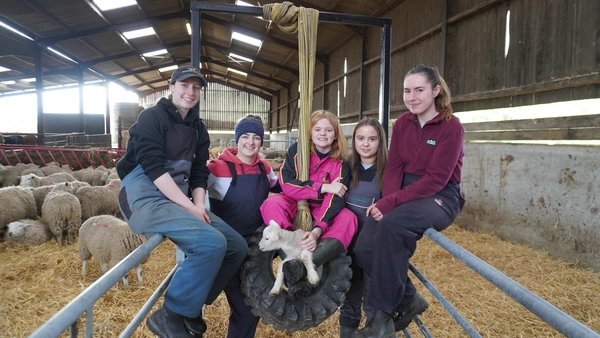
Monitor Farmer Bruce Irvine’s 400 mainly Highlander ewes lamb outside during the day, coming in at night, with vet students and family and friends assisting. His aim is to ensure the lambs’ immune system is never compromised, keeping them as healthy as possible so they perform well.
As a result, losses from scanning to weaning at Sauchentree, near Fraserburgh, have fallen significantly, from the Scottish flock average of 15% to less than 7%. Better lamb health has also meant they finished earlier with less supplementary feed; in the first year it was 10t less, saving more than £1,600.
A range of tactics have helped boost lamb survival and performance, with a team meeting at the start of lambing being a crucial part of the whole approach. That’s when vet consultant Tim Geraghty and farm vet Alison Taylor from Buchan Vets spend half a day with everyone involved in the lambing, discussing, demonstrating and getting lambers to practice key skills. It means everyone knows what needs to be done and how, with Bruce adding that team members are often more accepting of vet instructions than if he were to tell them.
Tim says there is a temptation to think everyone, and especially vet or agri students, will be familiar with lambing and tasks such as stomach tubing, but it’s not always the case.
He says: “It’s dangerous to assume everyone will know. You need to make it easy for people to say they are not 100% sure, and that they won’t be judged for saying that. Part of our time on the visit is spent ensuring everyone is confident about tasks such as stomach tubing, and to make it the default that everyone does it in the same way.”
The discussion also covers biosecurity and personal hygiene, as keeping wellies and clothing clean can make a massive difference, says Tim.
“It’s normal that on a mixed farm your wellies and leggings or overalls might be a bit dirty or muddy, but during lambing you are dealing with very high risk baby lambs who are trying to develop their immunity in a very busy area.
“Having clean hands, using gloves and having clean leggings can make a massive difference. Set the bar that the lambing shed will be a clean place. If you set out with clean leggings, you are likely to wash them down if you get some lamb skitter on them, but if you start with dirty leggings they usually just get dirtier and you are less likely to notice and can pose a huge infection risk.”
At Sauchentree, everyone power washes their leggings and boots four times a day, with disinfectant foot dips in every shed.
Bruce has also equipped his lambing sheds with a basic ‘lambing kitchen’ to make cleanliness easy. A sink, kettle and paper towels mean it’s quick and easy to clean equipment such as stomach tubes between every use. A working fridge also allows colostrum to be kept at the right temperature to avoid any bacterial growth which could negatively affect lambs.
“The lambing kitchen means we are not having to run to the house all the time. It makes doing things straightforward – it’s easy for folk to do the right thing.”
Last year he also stopped using one of his sheds for lambing, despite it being well equipped, choosing to instead move the operation into two adjacent sheds. “Our cows calve outside now, so we had a free shed and I was also fed-up of moving everything out of the other shed for lambing.
“It has made a big difference. I didn’t think about the distance at the time, but going between the sheds nine or 10 times a day just added to the tiredness.”
He has also started housing sick lambs and ewes in a separate building until they are better, which has stopped them spreading bugs to the healthy ewes and lambs.
Even so, Tim adds a cautionary note: “These poorly lambs will be excreting millions of bugs, and when you are nursing them, you have to be very aware of that, as you can very easily spread it. Your responsibility is to the whole flock, so even if you save one lamb, if you infect another 20 or 30 that is not a gain.
“Every time you kneel down in the sick lamb pen you will pick up their bugs, and can potentially carry them back to the main, healthy flock. It’s worth raising the awareness of how dangerous the sick and pet pens can be to other lambs.” Biosecurity and cleanliness between the main flock and these pens is critical, he says.
At Sauchentree, all pens are cleaned out and disinfected after every ewe. A spray disinfectant is applied to the wooden pens and floor via a garden hand pump, and a lime-based powder is spread on the floor before bedding down. Pens are bedded with wood shavings which also have some anti-bacterial effect, says Bruce. Shavings are bought in bales to make handling easy at lambing.
Bruce has also changed the watering system, with individual buckets being replaced with a piped system using drainpipes with holes cut in them. “It cost very little to do,” he says. This ensures ewes have fresh water at all times, and saves buckets being tipped or lambs getting stuck in them.
Ewes are offered a TMR mix as soon as they have lambed, avoiding the risk of negative energy balance and ensuring they have plenty of colostrum and milk.
Colostrum is one of the key topics covered in the vet meeting, with quantity, quality and quickness being the watchwords. Ensuring every lamb has received enough, preferably within two hours of birth is crucial and so one person each day will take responsibility for colostrum for all lambs.
Bruce has started using clips for tails and castrating lambs, and this has cut joint ill cases. While they take some time to get used to, the farm had just one case last year, he says.
When ewes and lambs are ready for the field, after about 48 hours, they are taken in the trailer, with the area lambs travel in having plenty of shavings as bedding to keep them clean and dry. The trailer is cleaned and disinfected every couple of days to maintain biosecurity.
During a busy lambing Bruce says doing all of this can seem daunting, and there is a labour cost to it. “It takes time, and doing it takes thought and discipline, but it has just become part of the process here. I want to make sure lambs have a good start and that their immune system isn’t compromised at an early stage.”