

Suckler producers can now use a free Profitable Suckler Cow calculator to help drive breeding decisions alongside using their own judgement and stockmanship. The easy-to-use online calculator helps assess which heifers and cows are of most value in a farm’s system.
Developed as part of a project on the Argyllshire Monitor Farm, the Excel-based calculator uses straightforward data such as cow weight and body condition, alongside calf performance and feeding information to model profitability on an individual basis. It was launched at a Monitor Farm Scotland webinar, available to view free on demand.
Lorna Shaw, ruminant nutritionist with SAC Consulting (part of SRUC) who developed the calculator, said: “This is an innovative tool for farmers. It means that alongside physical traits used for heifer selection and a farm’s culling policy, the feeding costs of a cow over winter and calf performance can be used for a robust decision-making process.”
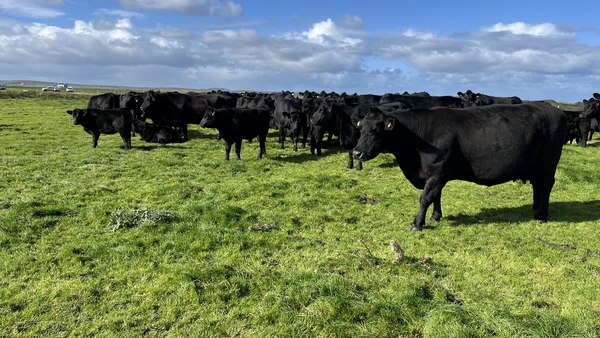
The aim at the Argyllshire Monitor Farm was to improve herd performance and reduce costs of production. Farming at Craigens Farm on Islay, host farmer Craig Archibald and family run a 2,000ha (4,940ac) tenanted unit. Their cattle enterprise has 220 suckler cows, with the focus on producing Angus and Charolais yearling stores.
Craig had already been trying to select for smaller cows to suit the farm’s outwintering system. He was collecting plenty of data but hadn’t done much with it. “Our cows looked decent, but we always had a few empty and some that had twins. The cows were doing alright, but just alright.”
He says it’s difficult to select the ‘best’ cow type as there are so many variables. “But mainly I just wanted a profitable cow.”
As a nutritionist, Lorna first worked with the Archibalds on ration and mineral planning, then focussed on what data should be collected to identify profitable animals that best suited the system at Craigens.
“Having the weight of cows and calves is probably the easiest and simplest data you can collect, and you can do a lot with it,” she said. These figures alongside ration data and bedding costs plus calf sale values can be fed into the online calculator. It will produce a margin over feed costs and an efficiency score for animals.
As a comparison tool, the calculator allows producers to compare options such as outwintering vs housing, age, breeds, different grazing systems, and how creep feeding would affect performance, she said. “It’s a really good benchmarking tool too.”
While Craig has only started using the calculator this year, it is already impacting decisions, with a traffic light system introduced for initial selection. Breeding females who scored well and met other requirements such as temperament and mobility were ranked as green, so were retained for breeding. Those scoring less well were put in the amber group (retain for breeding if necessary), while the poorest performing were in the red group (do not retain).
The retained females were split into an A and B herd, with the highest performance females (the A herd) put to a maternal sire to breed heifer replacements. These females are likely to be suited to the Craigen’s preferred system of outwintering and calving outside. The calculator shows these cows cost about £184/head less to keep in terms of overall calf margin.
The B herd – the lower ranking females who are less suited to the system so may need more feed or winter housing – will be put to a terminal sire to produce store calves. The split approach means the herd can be improved without losing too many females.
Craig said: “One of the most interesting things with the calculator was seeing those cows which we thought were just ‘in the middle’ but they actually do well on our system, while there are others who don’t perform well, but just get away with it.”
Lorna said: “The main aim with this project was to develop a tool for starting to look at profitability. Tools like this can often grow arms and legs, but we wanted something which required minimal data input. It will work for all suckler systems, and we will tweak it as we go forward, so we would welcome feedback.”
Christine Cuthbertson, Monitor Farm Scotland regional adviser added: “The calculator is a free resource for all producers, and is designed to be straightforward to use. It is very interesting to see how the project has helped focus on the data which really helps drive profitability, and how the calculator has allowed Craig to select the type of animal which will perform best for his system.”