

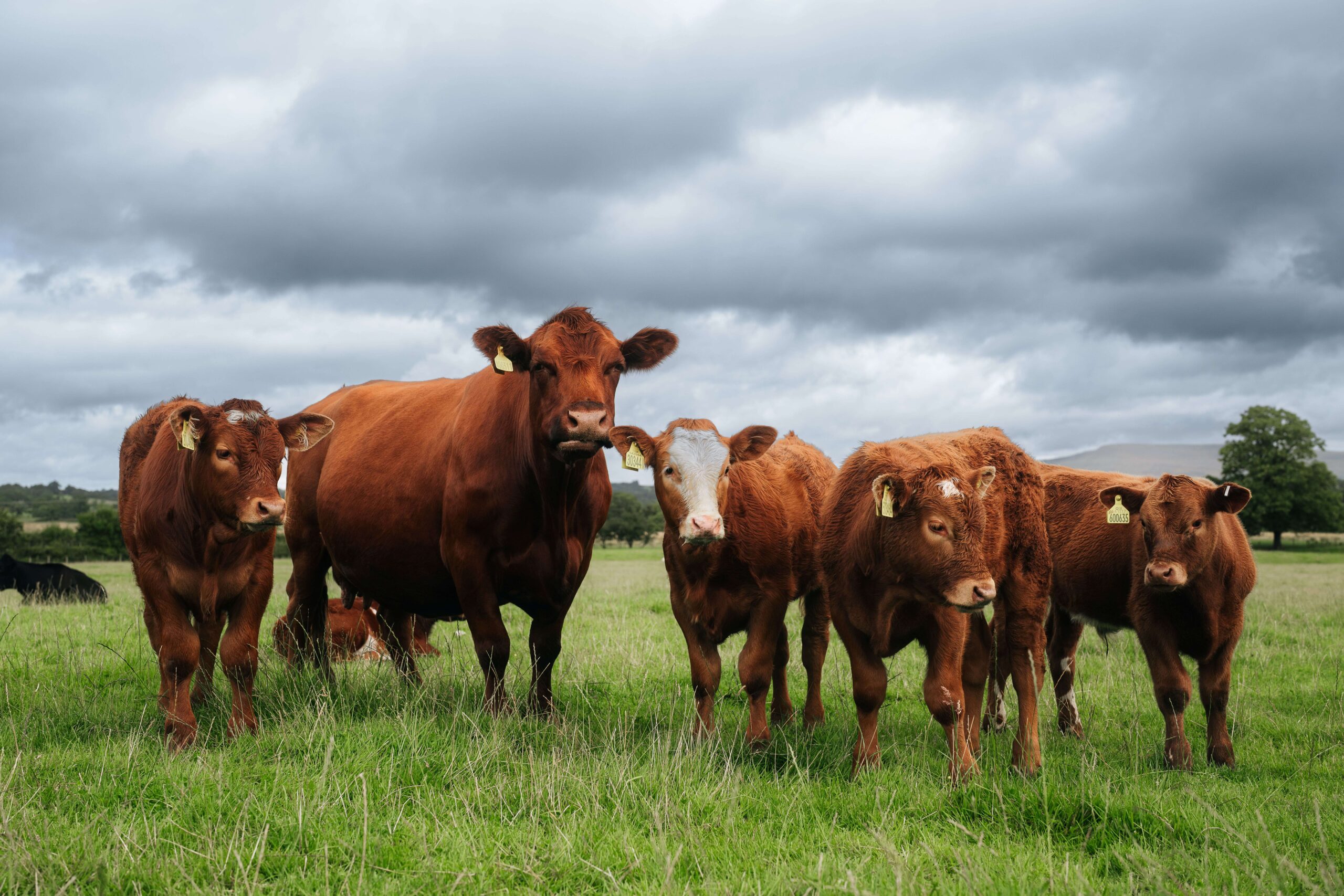
Scotland’s beef sector showed further signs of stabilising during the third quarter of 2026, as continued low slaughter levels helped build prime cattle numbers on farms and the decline in the breeding herd slowed again.
Latest cattle population figures show a modest but positive improvement in Scotland’s prime cattle supply. Numbers of males and beef-sired females aged 12 to 30 months were 1.8% higher year-on-year in July, compared with a 1.6% increase in April. The key 18 to 24-month age group rose by 2.2%, while cattle aged 24 to 30 months moved 3.4% above year-earlier levels. A 1.1% rise in the 12 to 18-month group helped support young bull slaughter over the summer and should continue to support availability through autumn and winter.
Commenting on the latest position, Iain Macdonald, Quality Meat Scotland’s Market Intelligence Manager, said: “The latest Scottish data points to a more stable supply position than we have seen for several years, although the market remains finely balanced. Prime cattle availability has been supported by slaughter levels staying lower than expected, while higher numbers of younger cattle should help supplies through the rest of the year.
“Across GB, cattle numbers aged 12 to 30 months moved into slight year-on-year growth in July after two years of decline. However, cattle in the main slaughter age group of 24 to 30 months remained tight, down 3%. The decline in the 18 to 24-month group eased to just 0.3%, while a 1.5% increase in cattle aged 12 to 18 months should bring some support as the year progresses.”
Higher calf numbers might normally be expected to ease competition at store sales, but that has not yet been the case in 2026. Auction volumes have remained tight, and prices have stayed close to 2025 levels. This may reflect changes in production, with suckler-bred calves still in short supply and many beef-sired dairy calves moving through dedicated supply chains rather than traditional store markets. July population data points to good availability of longer keep stores at autumn sales, although yearlings may be tighter following lower calf registrations in the second half of 2025.
Iain continued: “Lower-than-expected slaughter remains one of the main features of the market. Under-30-month slaughter fell much faster than expected in 2025 and Scotland’s slaughter rate has shown little sign of recovery so far in 2026. A reduced heifer kill, possibly as producers look to stabilise herds, is continuing to limit throughput, alongside the combination of a slower volume of demand from the market and heavier carcase weights.
“Comparisons with last year are also affected by the timing of cattle marketing in 2025. Slaughter was slightly higher year-on-year in summer 2026 but only compared with very low levels in summer 2025, and overall throughput remains subdued.”
In 2025, a small reduction in the net movement of Scottish-born cattle out of Scotland helped limit the fall in kill at Scottish abattoirs. However, these movements remained well above pre-2022 levels and increased again in the first half of 2026, driven by a 36% rise in cattle moving directly to slaughter elsewhere compared with 2025. Moves to English farms and auctions continued to fall from their 2022 peak but remained elevated, while slaughter of cattle born in England and Wales at Scottish abattoirs fell to a new low.
There were also further encouraging signs for Scotland’s breeding herd. In July 2026, there were 379,300 beef-sired females aged 30 months and over on Scottish holdings, down 0.6% on the year, the smallest fall since the beginning of 2022. Early September ScotEID cattle population data suggests the rate of decline has eased further, to around 0.3%.
Iain said: “The stronger seasonal change in numbers seen between spring and summer could lead to a small expansion in the herd during 2027 if it is maintained through the second half of this year. The rise in beef-sired females aged 24 to 30 months began to support the herd in April and continued into July.
“The suckler herd in England and Wales is also declining more slowly, but the fall remains sharper than in Scotland, with beef-sired females aged over 30 months down 1.6% year-on-year in July. Scotland’s dairy herd moved into decline at the start of 2026 after two years of growth, but the pace slowed in July, suggesting the downturn could be shorter-lived than previously expected. In England and Wales, the dairy herd decline has accelerated, which could affect prime cattle supplies at GB level in 2028.”
UK beef trade also reflected a challenging demand backdrop in the first half of 2026. Import volumes were broadly stable against year-earlier levels, while exports increased significantly. Non-EU suppliers accounted for close to 30% of UK beef imports, averaging 5,700 tonnes per month between July 2025 and June 2026.
Iain added: “Despite the change in where imports are coming from, the Irish Republic remained the dominant supplier in the first half of 2026, accounting for 64% of deliveries. This was down from 74% a year earlier and 77% in 2024. New Zealand has become the second-largest supplier, accounting for around 11% of imports at the start of 2026, ahead of Australia on 8.5%. Trade agreements have supported further market share growth from Australia and New Zealand, while Brazil’s gains have been more limited.
“Looking at the key Meating Our Potential measures, beef cow numbers have moved from red to amber as the herd moves closer to stabilisation. Productivity is rated green, while the outflow of cattle is rated amber. Beef cow numbers and productivity appear to have improved further in 2026, but the increased movement of cattle directly to slaughter outside Scotland remains an area to watch.
“Overall, the Scottish beef sector is moving closer to stability. Prime cattle availability has improved modestly, the decline in the breeding herd has slowed, and productivity signals continue to look positive. However, finished cattle throughput remains limited, store cattle finishing margins are squeezed, and the volume of consumer demand remains under pressure. The direction of travel is encouraging, but sustained confidence and continued herd retention will be needed before the sector can be considered to be on a firmer growth path.”
Click here to read the full Quarterly QMS Cattle Supply Update for Q3 2026.