

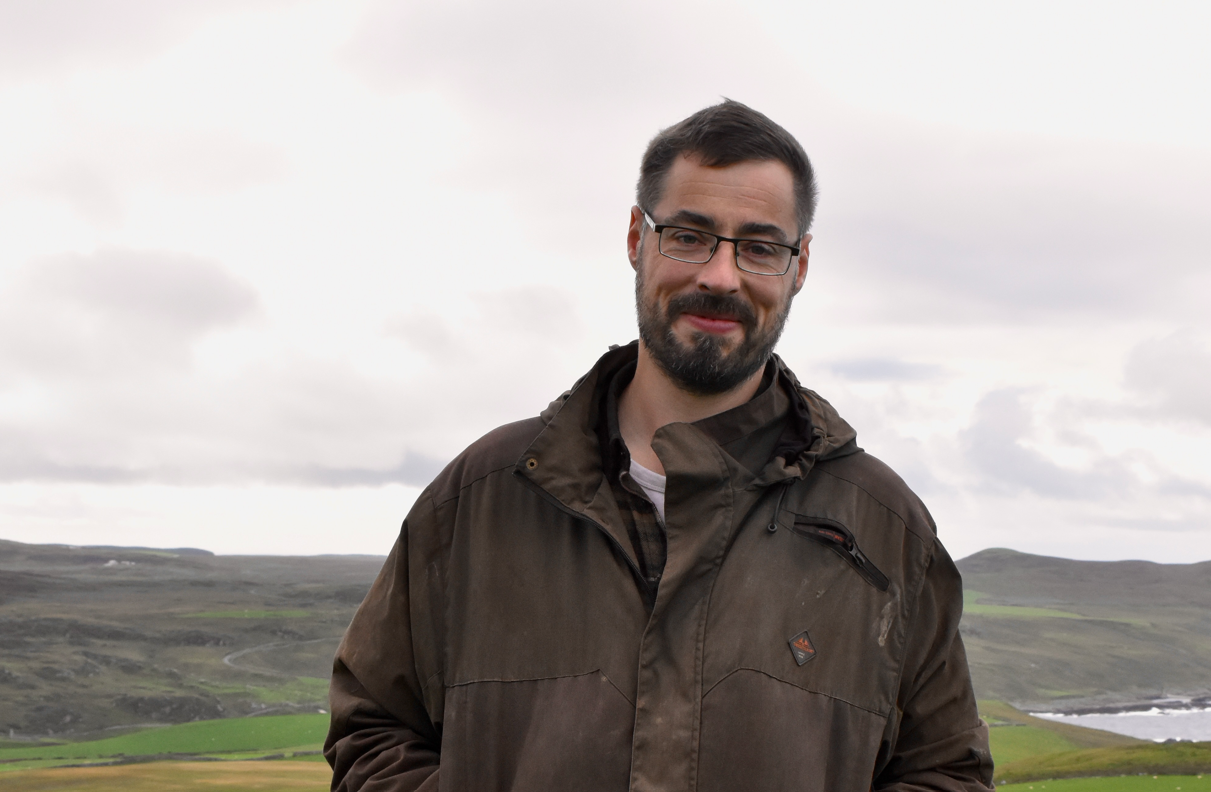
On the west coast of Islay, Scott McLellan farms a landscape shared by cattle, sheep and one of Scotland’s most endangered birds. Kilchiaran Farm is home to choughs, making the land both a place for livestock farming and an important habitat for wildlife.
Scott McLellan’s family have been farming on Islay since 1954, raising cattle and sheep for beef and lamb, whilst maintaining grasslands and habitats on the island. Scott spent his childhood on the farm before beginning a career in engineering until he took over the farm full-time.
Not only is Scott an engineer and a farmer, but also a custodian of the land. With barely 50 pairs of choughs remaining in Scotland, Kilchiaran is essential to the protection of the species, providing nests, forage from grazed grassland, and feed from cattle dung.
Farming and caring for the environment are far from separate. The two go hand in hand. “We’re the custodians…we help create the habitat for all these species to thrive.”
His stewardship extends beyond the environment as a food producer and employer, all while supporting local trades like vets, hauliers, tourism and hospitality. With higher operating costs and a long distance to market, isolated farming demands resilience.
Being a boat or plane’s distance away from most solutions, Scott is a jack of all trades. But without Scott and many other farmers on the island, the community would lose a lot more than one man with many skills.
“There would be less people in schools, there would be less tourism and after that the habitats will start degrading, the wildlife will start either moving on or become extinct. All that culture and connection to the land would be gone.”
Food production, environmental stewardship and rural communities are deeply intertwined; vouching for one can mean vouching for all. When farming thrives, so do the land, wildlife and livelihoods around it.