

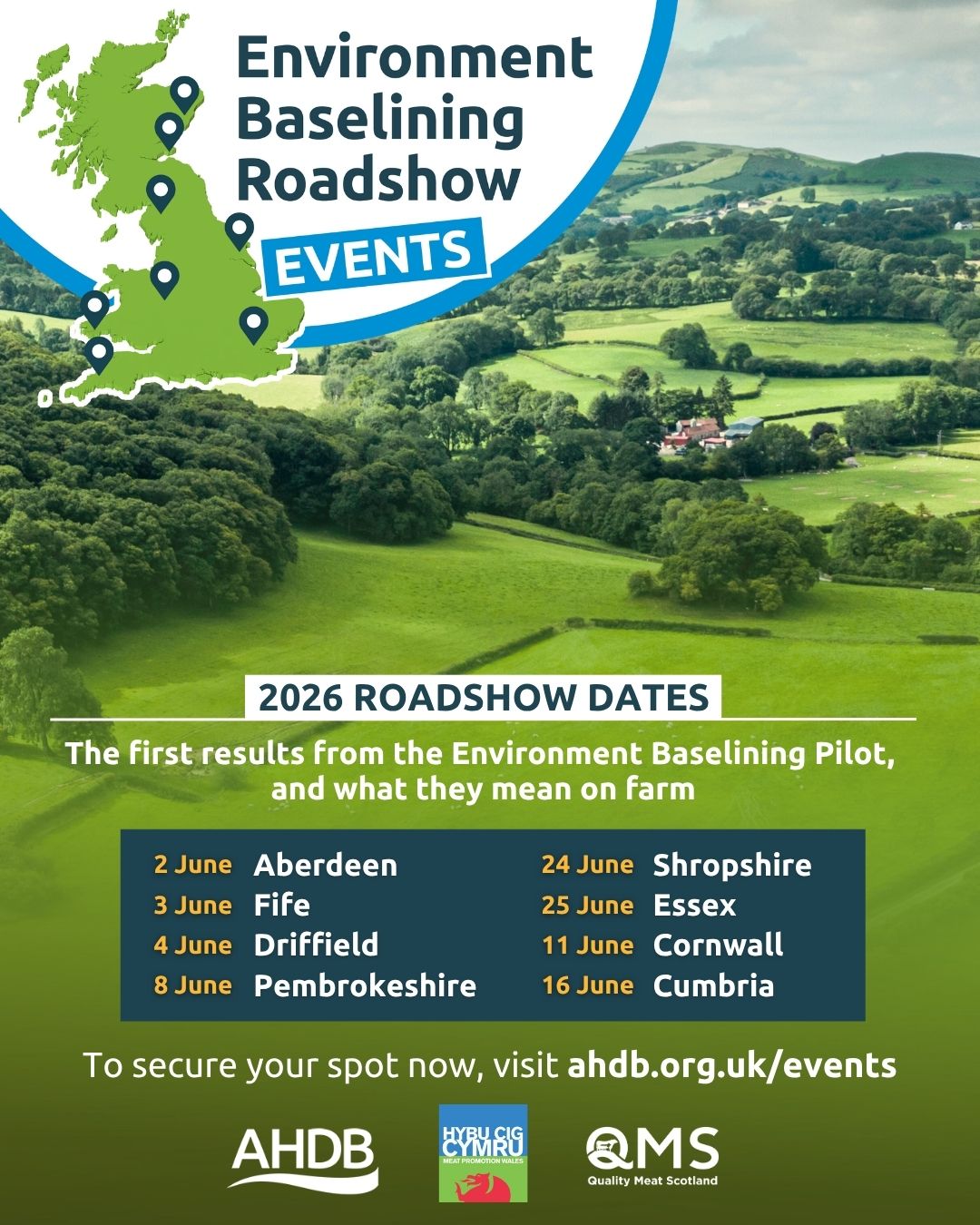
Farmers, producers and land managers across Scotland are encouraged to book their place now for the Environment Baselining Roadshow, taking place on Wednesday 3 June 2026, from 10:00am to 2:00pm, at Bowhouse, Newark Street, St Monans, East Neuk, Fife (KY10 2DB).
This event will bring those findings out of the reports and into the field. Through practical demonstrations and expert discussion, attendees will see how baselining insights can be used to support better, more informed decision‑making on farm, while receiving first-hand insight from Sam Parsons, who is participating in the pilot.
Bruce McConachie, Head of Industry Development at Quality Meat Scotland, said: “The Environment Baselining Pilot is about giving farmers clear, credible evidence they can use to make confident decisions for their business and the environment. This roadshow is a valuable opportunity to see how real farm data translates into practical action on the ground, and to learn how baselining can support both productivity and sustainability. We would strongly encourage farmers and land managers to book their place and engage with the project.”
Whether you want to understand what the EBP means for your own business or are simply curious about how agriculture impacts the wider environment, the day will offer useful, relevant and practical insight.
The event programme includes the latest updates and early results from the project, an introduction to the host farm, a keynote presentation on the EBP, and three interactive field station talks that explore how data translates into real-world farming practice. Refreshments and catering are included.
The open day is being held at Balcaskie, a modern working estate at the heart of the East Neuk of Fife. The estate covers around 2,000 hectares, stretching from the coastline at St Monans to Kellie Law and into the hills beyond, with a mix of let farms and in-hand farming operations.
Approximately 1,400 hectares of the estate is dedicated to organically farmed livestock production, following a conversion process that began in 2016. The farm carries a mix of native breed suckler cows and sheep, with grazing carefully integrated into crop production to improve soil health. Mixed grazing, winter cover crops and a focus on species diversity all showcase how productive farming and environmental outcomes can work together.
With places expected to fill quickly, early booking is strongly recommended. Book your tickets now to secure your place and see first-hand how environmental baselining data can help shape the future of farming.