

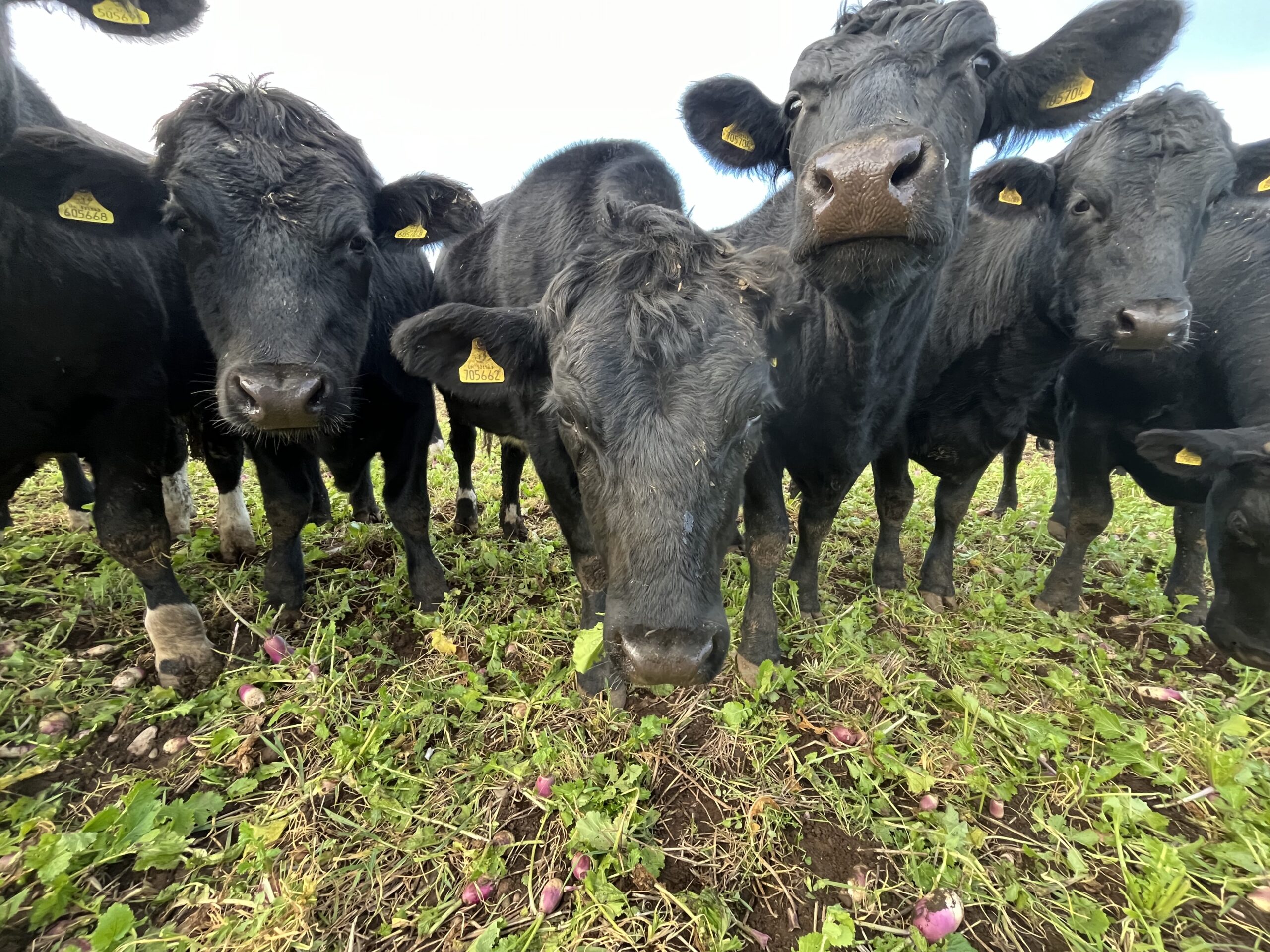
With this summer’s seed orders in mind, farmers can use a new in-depth report on overwintering forage crops to help make drilling decisions. The Monitor Farm Scotland and SAC Consulting practical guide covers everything from cost of production and yield to nutritional analysis – and found that protein levels in some crops far exceeded traditional book values.
Carried out across four North-east Scotland farms, including the Deeside Monitor Farm, the project ‘Maximising the potential of forage crops in a challenging climate’ looked in-depth at 10 forage crops, from establishment to feeding performance.
The choice of crops across the farms was different, depending on space available, resources on farm and the class of stock to be outwintered. The variables made comparisons challenging, says Beth Alexander, Monitor Farm Scotland programme manager. “There is no one crop outstanding overall, but there are clear winners for highest DM, highest nutrition offered and lowest cost.
“The main message from this is to consider your particular farm situation and what you need from the forage crop – the report is a comprehensive and useful look at all 10 options.”
Total cost of the forage crop, as well as supplementary feeding was taken into consideration, calculating the ha cost/kg liveweight carried, with the lowest being deferred grazing and the highest being stubble turnips.
The lowest cost crop/kg DM to establish was deferred grazing at 0p/kg DM (no cost), followed by the stubble turnip catch crop (2p/kg DM). The average across the 10 crops was 6p/kg DM.
For energy cost/kg DM, the deferred grazing had no establishment cost, so was effectively free. The stubble turnips catch crop, at 1.4p/MJ ME, was next. Average across the 10 crops was 3.8p/MJ ME.
Livestock units grazed/ha stood out at 16.88LU for suckler cows on beet, with a low of 2.40 LU on the stubble turnips; an average of 8.28 LU was seen over the 10 crops.
Protein analysis raised some interesting results, with some levels far exceeding traditional book values. In the case of kale, protein levels are typically 16-17%, but Duncan Morrison’s kale was 30% protein on the Deeside Monitor Farm.
Beth adds: “The average cost over the ten crops was 0.5p/kg protein, with the best being the stubble neep catch crop and kale, due to their low establishment costs. The four businesses are continuing to analyse their forage crops to understand whether these figures are normal or unusual for the year.”
The guide includes information and links to videos about the systems involved on each of the farms, physical and financial comparisons for each crop, energy costs and feedback from each of the farmers. It also includes an example of a ready reckoner, allowing farmers to calculate their actual field yield and daily allocation of crops.
‘Maximising the potential of forage crops in a challenging climate’ is available to download free from the Monitor Farm Scotland website: https://bit.ly/49g1MGL