
Quality Meat Scotland’s (QMS’s) new economic modelling shows Scotland’s sheep sector could add around £77 million in output and £21 million in Gross Value Added (GVA) by 2032, driven by strong demand at home and overseas.
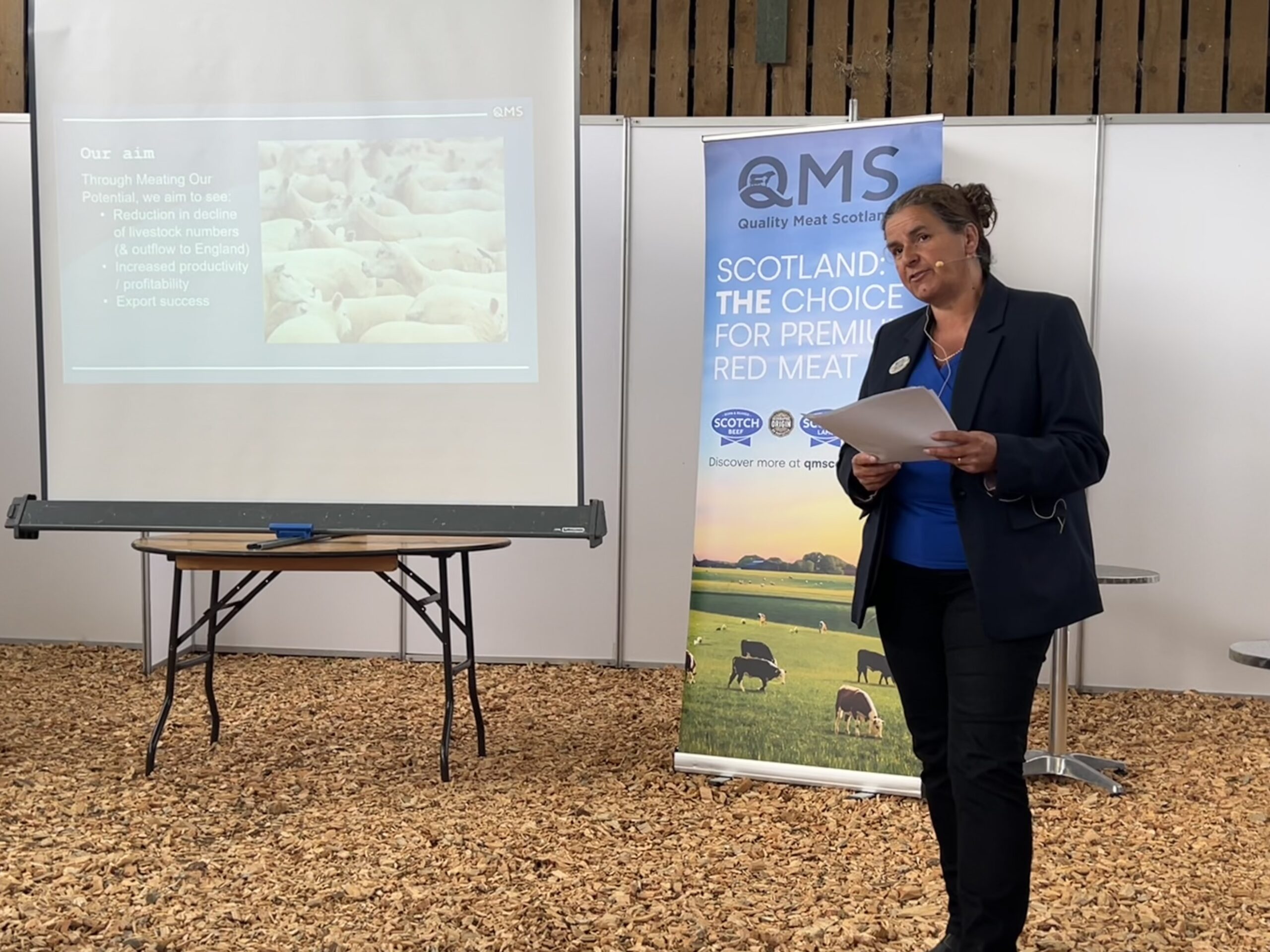
The Scottish opportunity was presented by QMS with support from the National Sheep Association (NSA) Scotland to hundreds of producers at Scotsheep 2026 (10 June 2026), building on its 2025 beef sector work with the Scottish Red Meat Resilience Group (SRMRG). The modelling highlights the Scottish supply gap from demographic change and increased consumer appetite for high-quality healthy protein equates to an additional 4.3k tonnes of sheep meat by 2032.
Achieving this extra volume of production would require Scotland’s lamb numbers to rise by 5%, which in practice is a few more ewes per holding each year for the next six years.
Kate Rowell, QMS Chair, said: “Our research shows there is persistent strong demand for Scottish lamb and a significant opportunity to produce and process more at home. The market signals are encouraging, with stronger demand in the UK, a falling EU sheep flock, and a drop in lamb production in England. Combined with significant productivity gains in Scotland over the past decade, we have considerable scope to capture more value from the sector.”
Scotland’s natural climate and landscape further positions the country to support food security, economic growth and environmental outcomes.
The research also highlights an economic opportunity to retain more value in Scotland by making greater use of domestic processing capacity.
Kate continued: “There remains a large net outflow of store and finished lambs to England and Wales with demand from English finishers and processors for Scottish-born lambs likely to continue from the contraction in England’s sheep flock. It is therefore vital that the full Scottish red meat supply chain is positioned respond to this opportunity.
“Demand is strong, the market fundamentals are positive, and Scotland is well placed to respond. The focus now must be on capturing more of that value at home, supporting rural communities and helping drive sustainable economic growth.”
Alec Telfer, Chairman of NSA Scotland, said: “NSA Scotland is delighted to support this work led by QMS, particularly as it is funded by producers and rooted in the needs of the sector. It represents a fantastic opportunity for our industry to respond to clear market demand and to retain more of that value within Scotland.”
Beyond its direct economic value, QMS-commissioned social research highlights sheep farming remains a defining feature of rural Scotland and a vital part of the country’s environmental, social and cultural fabric.
Kate said: “Sheep support mixed farming systems and are part of more than half of Scotland’s farm businesses, with 90% being kept in less favoured areas, contributing to remote and disadvantaged regions. The sector is central to Scotland’s national identity and tourism offer, supports rural cohesion and communities, and maintains biodiversity reducing wildfire risk particularly in upland areas, reducing flooding risk and supporting carbon sequestration through natural land management by livestock grazing.”
The socio-economic research can be found on the Meating Our Potential webpage, strengthening the case for a coordinated, whole-supply-chain approach to growth, helping Scotland respond to rising demand, strengthen food security and maximise the value created from its natural livestock strengths.