

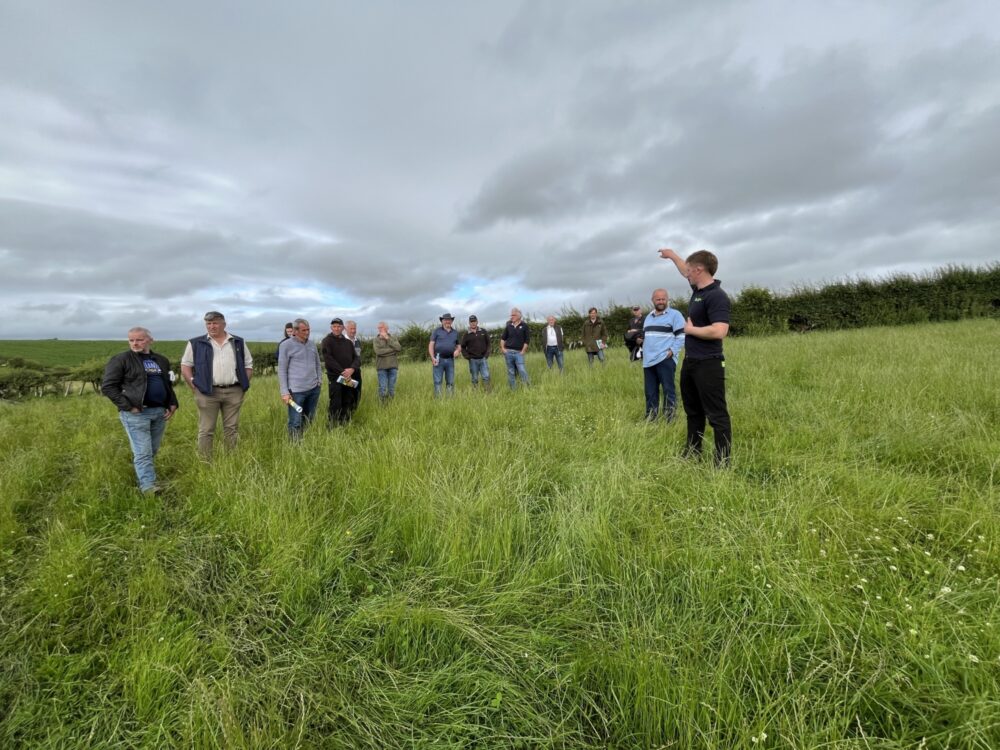
Have a clear plan for this spring’s grazing, and then have a plan B and a plan C. That’s the advice from grazing consultants and farmers Graham Lofthouse and John Ritchie, who are involved in helping Monitor Farm Scotland farms make more of their grass.
John, who farms at Montalt Farm in Perthshire, started closing up paddocks in mid-October, resting grass for 100-120 days over winter. This allows roots to recover so they have energy to ‘get going’ in spring. So far, he has opening paddocks for an initial ‘spin round’, with priority stock – twin- and triplet-bearing ewes – grazing each paddock for a day, starting about four to five weeks before lambing. “The grass is as good in protein and energy as bought-in feed.
“This initial short, sharp graze helps eat off the winter growth, and sets grass up for spring. It’ll grow four to five times quicker following this, but it must be a short, fast graze of not more than two days and then into the next paddock.”
After this, and about 10 days before lambing, his ewes are set stocked in the fields where they will lamb. “They need some time to acclimatise and spread out, finding lambing spots, and this also makes it easier for shepherds.”
Graham, who farms sheep and cattle near Stow in the Borders, takes a similar approach, but adds that turnout timings and ‘magic day’ when grass supply outstrips demand, are different for every farm, depending on their geography. “We’re in a steep valley and it’s windy, with little sun, so we are a week to 10 days behind farms over the hill in Lauderdale.”
He says that whatever system you are using, it’s essential not to overgraze at this early stage. “Grass grows grass; you need the leaf there to capture sunlight and take up nutrients.”
With many farms enduring a very wet winter, John warns that growth may be slow as wet soils take longer to warm up and some leaching will have occurred. “Have a plan and know what’s there, as stock must get what they need. If you need to buy an input such as feed or fertiliser, do it.”
Having a plan B and even a plan C is important, adds Graham. “Plan A doesn’t always work, so be ready for that. If you’re grazing early, don’t be afraid to take them off, and think about how you could manage silage or feed. If the weather goes to pot and there’s no grass the worst thing you can do with ewe mobs is take the snacker out – that approach is carnage.
“If you’re planning to apply N, wait until the soil temperature is 5.5-6degC otherwise the response will be lower.” Even with higher fertiliser prices, a good growth response to N is cheaper and easier than looking for additional grass.
South Ayrshire Monitor Farmer David Andrew, who farms sheep and beef alongside his father John at Rowanston near Maybole, started rotational grazing last year. The first 250 ewes and lambs were mobbed and rotated round 26ha (65 acres) split into 1.4ha (3.5 acre) paddocks, with 20 store cattle following and stock moved every 2.5 days. This spring, ewes have come off fodder beet, have grazed the paddocks once and are now set stocked for lambing.
Having learned from last year, David will change a couple of things. “I’ll have more confidence to put that many ewes and lambs together and turn out early – I was a week to 10 days too slow last year. It was a daunting sight, and I was worried about moving such a big group between paddocks because of mismothering, noise and stress, but when I did it and came back 10 minutes later, it was all quiet. The sheep and cattle learn quickly and cross the fence themselves when it’s down.”
Last year grass growth took off, and he ended up cutting a few paddocks for silage. “We didn’t have enough cattle to clear up the paddocks behind the sheep, so this year we are looking at running 40-50 cattle. We want them to grow on at grass and they’ll be finished in the house over winter – last year they were the best grazed cattle we had on the farm.”