

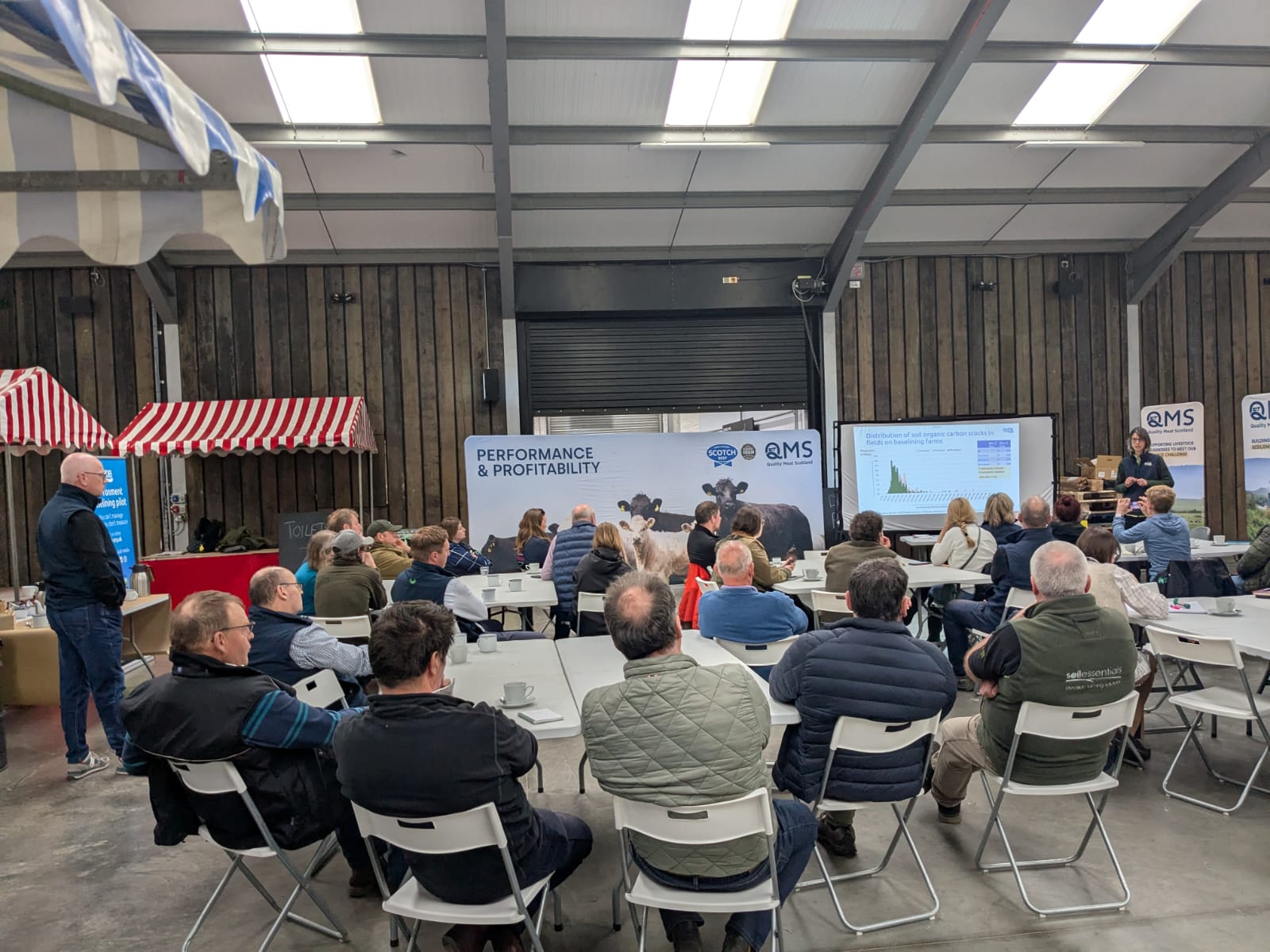
Initial findings from a pioneering environmental baselining pilot, suggests that current carbon accounting methodologies could significantly underestimate the amount of carbon stored in Scottish soils, with on average 30% or more of soil organic carbon on the pilot farms sitting below the commonly measured 30cm depth.
The pilot, delivered by AHDB with support from Quality Meat Scotland (QMS) and Hybu Cig Cymru – Meat Promotion Wales (HCC) is working with 178 farms across British agriculture, including 35 in Scotland of which 22 are beef, lamb and pork. It represents one of the most detailed assessments of carbon stocks across British farmland in recent decades.
Using soil sampling to depths of up to one metre where possible, alongside LiDAR scanning of above‑ground features, the project has generated a robust baseline of environmental data. Over 53,000 soil cores have been collected across more than 5,000 fields, with analysis now underway.
Early findings from the initial 170 farms show that around 95% of estimated carbon stocks on participating farms are held in soils, with the remainder stored in trees and hedges*. In addition, analysis to date suggests that the level of carbon storage on participating Scottish farms may be higher than the other participating farms (139 carbon tonnes per hectare in Scotland compared to 128 carbon tonnes per hectare in Great Britian).
There is also huge variation between soils, with some fields in Scotland exceeding 600 carbon tonnes per hectare.
QMS Chief Executive, Sarah Millar, said: “After completing the initial measurements of this pioneering environmental baselining pilot, it is fantastic to have promising data on carbon storage across the participating regions.
“This has highlighted the significant and unique role that Scotland’s farmland plays in carbon storage, with more mixed farming and permanent grasslands and the importance of a comprehensive and complete evidence base to demonstrate this. The production of Scotch Beef, Scotch Lamb and Prime Scottish Pork is underpinned by the highest stewardship of our land and livestock, which this emerging evidence showcases.
“As the rest of the results continue to come through, we look forward to further understanding the strengths and opportunities of Scotland’s natural climate, landscape and farming systems to support Scottish farmers in sustainable food production for generations to come.”
Alongside carbon stock measurements, each participating farm has also completed a carbon audit. These audits estimate greenhouse gas emissions and removals through a carbon calculator and help farmers identify tailored actions for their own businesses.
The next phase of the pilot will focus on understanding the drivers behind differences in soil carbon stocks, including soil type, land use and management practices, and how this can inform future decision-making on farm.
QMS, alongside AHDB held two successful on farm events in Scotland at the beginning of June to share further insights from the pilot, offering farmers and industry stakeholders the chance to explore findings and discuss practical applications.
Data collation and analysis will continue over the next few months to build a more detailed breakdown of the findings from the work carried out during the first full year of the programme. This will allow for a deeper understanding of the strengths and opportunities of each sector and how they interact with and effect on farm management. Each farm business involved in the pilot will also work with specialists to understand how their management can be improved to build environmental, and business resilience.