

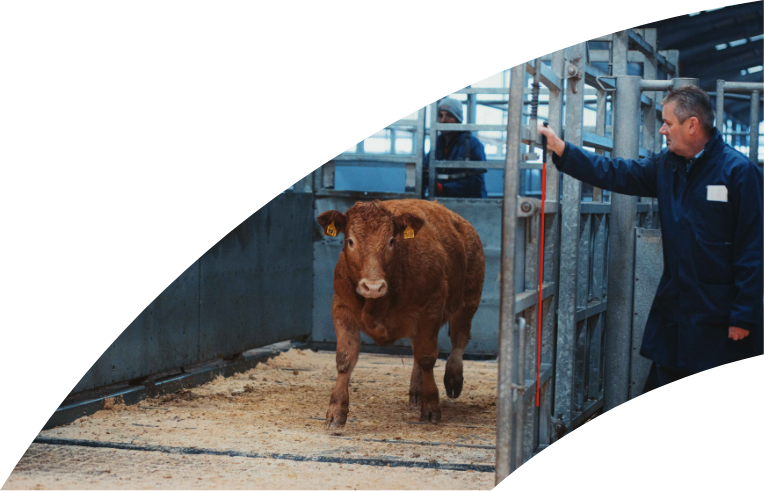

Growth
If the first two priorities have been addressed and are being engaged with by the wider industry, then the third and most critical priority will be growing the national herd. This can be achieved by building confidence within the sector so that people are comfortable that they have the tools to develop and deliver a continually growing and improving cattle sector.
Innovation
Charles Darwin first established the concept that strength and intelligence were useful but the ability to adapt to a changing world was the most useful tool for survival in the natural world.
The same is true of agricultural businesses. The weakest businesses and the ones that are more susceptible to change are the ones which are incapable of adjusting their own production methods to capitalise on opportunities or mitigate threats.
One of the most effective ways to judge whether your business is as innovative as it can be is to regularly evaluate your system of production and understand if there are more effective ways that you can produce livestock:
- Can you grow more feed to reduce the need to buy in?
- Are you able to identify poor performance faster?
- Are any of your KPIs below the ideal level?
- Do you monitor fertility performance within your herd?
Innovation can come in several forms but is most closely associated with progressive or new ideas is adapting to new or advanced technology and the solutions they may present.
For example, the use of innovation like feed bins that can record or track the intake of animals can help ensure that nutrition is targeted and that genetic selection is as effective as it can be.
QMS has a topic sheet on unlocking genetic potential through precision breeding – Topic-Sheet-Genetics-final-2.pdf

Management Methods
However, innovation is not simply about finding a new solution, it may be more closely related to finding an old management method.
One of the most obvious ways in which an older management method has been introduced to build efficiency in a modern production system is that of rotational grazing. While rotational grazing is gaining popularity and can produce more and more scientific data to reinforce the benefits it can provide, it is one of the oldest management methods and effectively replicates the grazing patterns of wild animals with predators replaced by electric fences.