


Productivity
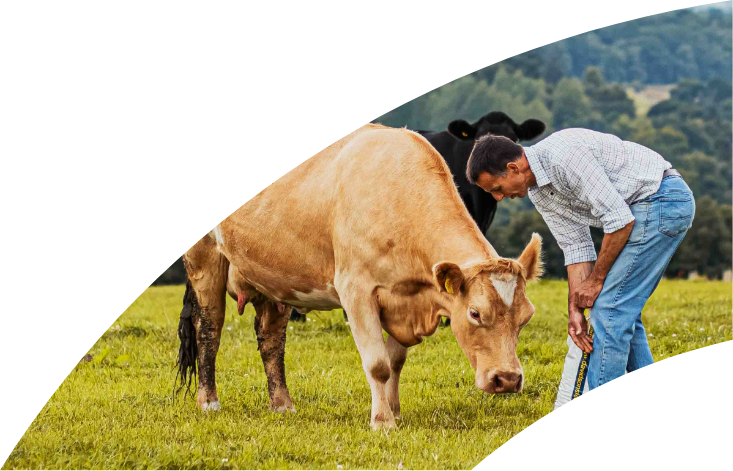
Productivity is the key to securing a strong, sustainable foundation upon which we can grow a thriving Scottish cattle sector.
This theme will help producers to look at the moving parts of their business and build a way of better understanding whether their business is performing as well as it can.
Focusing on simple metrics like outputs per cow and threats or weaknesses in your business, we can help to build resilient businesses that grow and continue from one generation to the next.
Using KPIs
Productivity is the key to securing a strong, sustainable foundation upon which we can grow a thriving Scottish cattle sector.
This theme will help producers to look at the moving parts of their business and build a way of better understanding whether their business is performing as well as it can.
Focusing on simple metrics like outputs per cow and threats or weaknesses in your business, we can help to build resilient businesses that grow and continue from one generation to the next.

CALVES PER COW, PER YEAR
The simplest of all metrics, every cow should produce one calf every year. It’s always worth bearing in mind that any cow can have on off year, and any cow can have twins, the only thing that remains to be seen is whether your business can accommodate a passenger that’s failed to provide a calf in any given year.
SIMPLE SUMS
If a suckler cow costs £700 to keep for a year, and a sold weaned calf is worth £1,200 the net income derived from the cow is £500. However, if the cow fails to produce a calf one year, but produces one the next, that cow has taken two years (at a cost of £1,400) to produce one calf, meaning the net income of £500 becomes a net loss of (£200).

Calving Interval
Calving interval is one that is familiar to most suckler producers in Scotland due to its inclusion as part of Scottish Beef Calf Support Scheme. Aside from this it is a very useful indicator as to the productivity of a herd. Calving interval can be an indicator of underlying problems within a herd or with individual animals. For example, an animal that takes longer to return to oestrus may indicate an animal with poorer fertility or may be a consequence of a traumatic calving. Informal evidence indicates that for every layer of intervention it takes an animal an additional week to return to a normal oestrus cycle, as below:
SIMPLE SUMS
Research indicates that the cost of an extended calving window is around £2/cow/day after the ideal calving window of 365 days. We know that the average calving interval for Scottish herds is 391 days (as of 2024) and 50% of the Scottish herd calves at 370 days or less.
Reducing the average calving interval of a herd of 50 cows from the national average of to 381 would save £1,000 in productivity over the herd.
An extended calving interval is usually an indication of an animal with fertility challenges and where this is more noticeable the animal should be assessed to establish if there is an underlying cause for it, before it gets worse.

Calf Survival
The average mortality for Scottish suckler herds is 6% for animals up to the age of 36 months. The knock-on impact though, is the cost borne by each remaining animal which is £5 per 1% mortality: a 2% reduction in calf mortality could offer a herd of 50 cows.
SIMPLE SUMS
If a herd of 50 cows has 50 calves and 3 of them die before weaning (6%), then the cost burden shared by the other 47 calves is £1,410.

Any significant enough reduction in age at slaughter, can provide several benefits to industry. It could reduce emissions very significantly and improve genetic profile of the herd if producers have an increasing incentive to select based on feed efficiency.
Increased growth rates during an animal’s life, especially in early life, reduces the cost of production.
SIMPLE SUMS
A 10% increase in daily growth rate allows animals to finish, on average, at 590 days instead of 650 days. At a conservative estimate of £1.60/day this has a potential saving of £96 per animal
While this is a useful focus for finishing businesses, as with all other factors, the foundation of performance begins with the suckler cow, and breeding animals that finish faster will always be in demand from finishers.
Calf and Cow Management
Farm Advisory Service (FAS) has a useful information page on cow and calf management including a calving intervals video and calving checklist – Cow and Calf Management | Helping farmers in Scotland

Daily Live Weight Gain
DLWG is a very useful metric to understand how animals perform more effectively. A steady increase in weight gain in growing cattle is a strong indicator for health. If DLWG slows or stops at any point when you wouldn’t expect it to (for example, we expect most animals DLWG to slow during the winter) this will likely indicate an underlying reason, like nutrition or health issues.

Cow Size v Weaning Weight
While the more simplistic KPI of ‘calves per cow, per year’ is the first way we should measure efficiency, another way to do so is by looking at the weight of calf weaned, compared to the weight of cow. Fundamentally, because bigger cows consume more to maintain themselves and their calf, they will reduce the margin of any calf.
Age at First Calving
While it may seem challenging to implement, it is genetically possible to calve heifers at 24 months of age. Cattle that have a balanced diet typically reach sexual maturity at little over 12 months, meaning that for most cattle this is easily achievable. With the right genetics, and the right management, there are opportunities to bring forward calving and bring heifers into productivity sooner.
Health is Wealth
Without doubt one of the best ways to monitor performance within a herd is by understanding the health of your livestock.
There are a number of KPIs related to health, and these serve as useful ways to monitor productivity because animals that are healthy are more likely to be more productive through growing and reproducing.
A positive relationship with your vet is more and more important to high performance, and having an extra pair of eyes on the performance can only be a positive thing. A vet you can trust can be uniquely positioned to lend an outside perspective while also being aware of how the business operates. National Beef Association (NBA) has a number of health fact sheets to support your productivity, which can be found here.
Health is Wealth section coming soon.
Case study
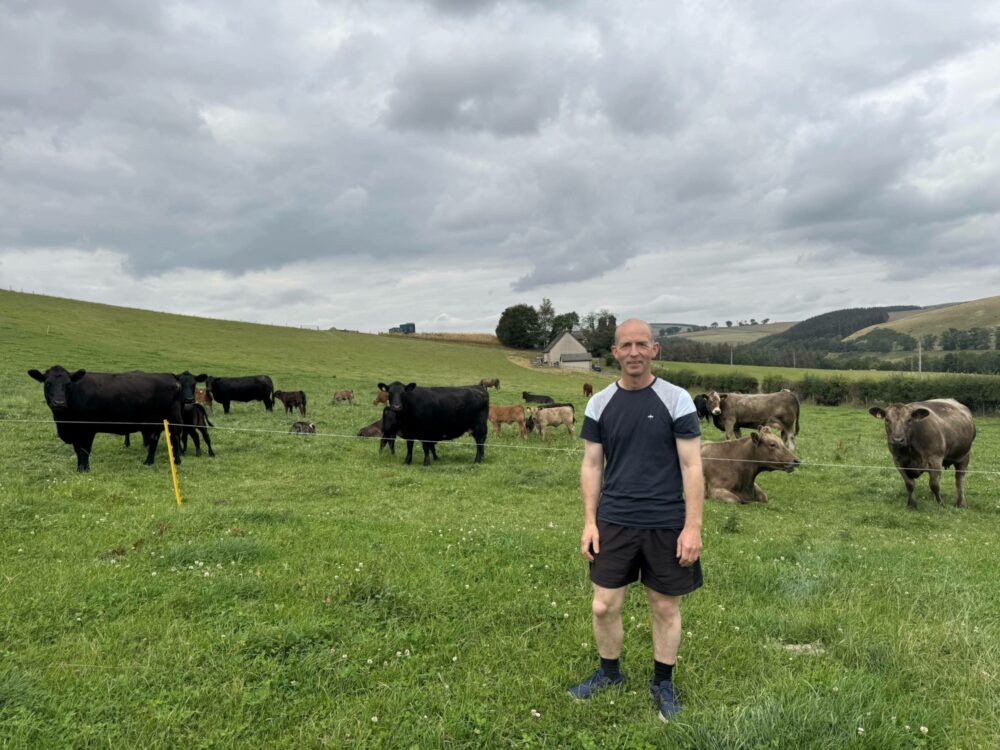
Graham Lofthouse farms, Bankhouse Farm
Graham Lofthouse farms at Bankhouse Farm, near Stow in the Scottish Borders. With tight margins in livestock production it’s essential that businesses are as efficient as they can be so Graham regularly monitors his Key Performance Indicatiors to ensure efficiency and productivity.